
Lewis County Deed Types
Lewis County deed records cover ordinary sales and less direct transfers alike. The instrument name matters. Because the county publishes no public menu of index categories, give the Clerk, Auditor, and Recorder the exact deed type you want searched. Treat the terms below as request vocabulary.
| Deed Type | What It Does | Common Use |
|---|---|---|
| Warranty deed | Conveys land with stated promises | Ordinary purchase |
| Quitclaim deed | Transfers the interest a grantor may hold | Family transfer or title cleanup |
| Trustee or sheriff deed | Records a sale through a trust or court process | Foreclosure or execution |
| Personal representative deed | Conveys estate property | Probate sale |
| Tax deed | Records title after a tax process | Tax-deed transfer |
Related files include deeds of trust, reconveyances, assignments, liens, satisfactions, easements, rights-of-way, covenants, surveys, plats, and street vacations. A deed conveys an interest. A mortgage, deed of trust, or lien instead burdens the land, and a later release can resolve it. Ask for both sides of that record trail.
Lewis County Recorder Requests
The Lewis County Auditor page represents the Clerk, Auditor, and Recorder in one office. It publishes a public-record request form. No online deed search exists there. Visit 510 Oak Street, Room 1, Nezperce. Call 208-937-2661. Requests can also go to awinner@lewiscountyid.org or fax 208-937-9234.
Include the parcel ID, current and former owner names, a legal-description lead, the document type, and a date range, and ask about inspection, electronic images, certification, and a written fee estimate, since the recorder posts no copy-fee schedule.
See Lewis County Deed Access
The official office page shows the request route. Before submitting details, review the Recorder source, since county contact instructions can change.
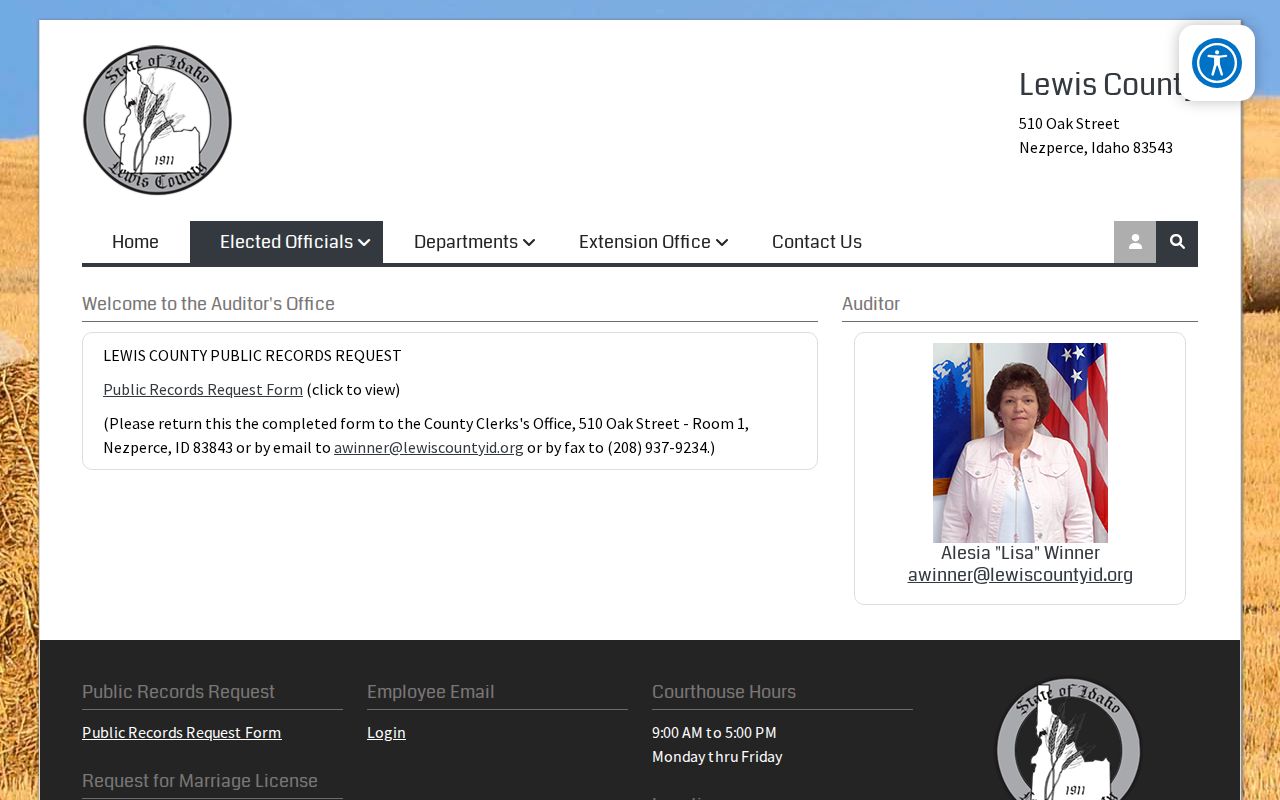
The page describes an office, not a deed database. That gap makes a precise parcel, name, and date request essential.
Lewis County E-Recording Limits
A CSC bulletin documents electronic recording in Lewis County. E-recording lets eligible submitters deliver instruments. It is not public index access. Nor is it a deed-image library or proof that old books were ever imaged.
Note: Ask the Recorder which retrieval route fits the exact deed or related instrument you need.
Lewis County Deeds Before 1911
The FamilySearch catalog lists deeds and an index dated 1868 through 1911. Those years predate Lewis County itself. Territorial or predecessor-county context may therefore matter. The catalog is an older-record lead, not a current grantor-grantee portal. Images may require a free login or a FamilySearch Center. The Idaho State Archives offers land and plat research routes. Preserve every book, page, name, and description. Then ask the Recorder how the citation maps to the official record.
Walk Lewis County Deeds Backward
A grantor gives an interest. A grantee receives it. A chain of title is the linked sequence of recorded transfers. The county publishes no current public index, so its online cutoff cannot be stated; begin with the latest deed and follow its names and prior references.
- Match the current parcel and legal description.
- Request the newest conveyance.
- Read its grantor and prior deed reference.
- Find when that grantor appeared as grantee.
- Repeat through deed books and archives.
- Grantor
- The party transferring an interest.
- Grantee
- The party receiving it.
- Chain of title
- The ordered sequence of recorded transfers.
- Book/page or instrument number
- The recorder reference used to retrieve a filing.
Lewis County Chain Breaks
Probate orders, personal representative deeds, tax deeds, sheriff deeds, trust instruments, name changes, and parcel splits can break a simple chain. Search the estate under decedent, representative, and estate names. Keep punctuation and suffix variants for business owners. Property court events may surface in Idaho iCourt. The actual file stays at a courthouse kiosk or with the clerk. Use the case to locate an order, then return to the Recorder for any instrument recorded against the land.
Lewis County Plats and Easements
Deeds can point to a plat, survey, easement, right-of-way, dedication, or street vacation. Urban descriptions use lot, block, addition, and townsite. Rural ones turn to section, township, range, aliquot parts, or metes and bounds, a written course-and-distance description.
Craigmont's street-vacation ordinances, plus its former Ilo and Vollmer names, can explain an access mismatch. Nezperce addition names offer plat-search terms. Request any exhibit a deed incorporates.
Get a Lewis County Deed Copy
Start at the courthouse counter. Phone, email, fax, and the county form also work. Archives and FamilySearch are fallbacks for older deed records, and newspapers can reveal names or legal notices. None of them issues a certified current deed, so keep an inspection or uncertified-image request separate from a certified-copy request.
Recorded, not guaranteed. Filing gives public notice, but the county does not certify valid, complete, or claim-free title.
Before relying on any copy, compare names, legal descriptions, references, and later releases. Details matter. A title company or Idaho attorney should settle legal title for a purchase, an estate, or a disputed boundary. The same goes for an unreleased claim. The Lewis County property lookup supplies the current parcel key before a deed request.
Lewis County publishes no official deed-fraud alert signup. An owner worried about an unexpected filing should contact the Recorder directly. Ask for the newest instruments under the parcel and owner names. Compare grantees, legal descriptions, signatures, and dates. Any county-looking deed-copy solicitation deserves doubt. Verify quoted fees through the official Auditor page before paying.
Idaho public-record law does not oblige the office to build a title report. Nor must it chase an open-ended research question. So be specific. State the document types, parties, parcel, description clue, and date span you need. Include FamilySearch citations for older material. Then ask how each citation maps to the official county volume.
A deed may incorporate an exhibit, plat, survey, court order, or prior instrument. Ask whether the copy includes every page and acknowledgment. Request any later correction or release as well. A missing exhibit can break that tie to the land. Retrieve each cited source. Never treat one deed as a complete title file.
Keep a retrieval log. List the office, request date, search names, and parcel key. Add the instrument type, recording date, and whether each copy is certified. If a clerk reports no result, revise one variable at a time. Test an alternate owner spelling. Try an entity suffix, a former parcel number, or a historic place name. That log of unsuccessful searches also helps a title professional continue the work.
Frame a Lewis County Deed Request
Lewis County offers no public deed-search form. Start with the full parcel ID. Pull the legal-description lead from GIS. Add current and former owners, the instrument type, and a narrow date range. If the goal is a release, give the mortgage, lien, assignment, or prior recording reference it should satisfy, and ask staff to preserve the instrument number or book and page.
Search personal names with initials and middle names. Search a trust under both trust and trustee, and an estate under the decedent and representative. Keep company suffixes while testing punctuation-free forms. Craigmont searches should include Ilo and Vollmer. Nezperce may appear as Nez Perce.
Specify whether you need inspection, an electronic image, a plain copy, or certification. No copy schedule is published, so ask for a cost estimate. The Public Records Act does not require staff to create new records or answer open-ended research questions.
Follow Lewis County Related Instruments
A deed rarely settles a difficult title question alone. Read its exceptions, reservations, and references to plats, surveys, easements, covenants, rights-of-way, and earlier conveyances. A deed of trust may need a reconveyance. A lis pendens may lead to a court case and a later judgment, dismissal, or sale deed.
Probate, tax, and sheriff transfers deserve care. Parties may not form a simple chain. Search iCourt for public case information, request the order from the clerk, and confirm the final land event with the Recorder. Newspaper notices add names and dates but never replace the recorded outcome.
Bridge Older Lewis County Deed Books
The 1868 through 1911 FamilySearch title matters because Lewis County was organized in 1911, so an older chain may cross territorial or predecessor-county context rather than modern office labels. Keep the catalog title, film or image reference, book, page, parties, date, and legal description together. Ask the Recorder about original volumes. A successor index may exist at the courthouse.
The Idaho State Archives route supports land, plat, tax, court, and probate work. Permanent county categories include deeds, deeds of trust, mortgages, plats, surveys, and tax rolls. Probate estate registers run from 1911 through 1940. They bridge gaps from death transfers. Archival images may require an appointment, research request, account, or FamilySearch Center visit.
Newspapers track notices, sales, and probate activity. The Lewis County Register collection spans 1919 through 1956. The Winchester Reporter was absorbed in 1938. Kamiah's Clearwater Progress CDs span 1908 through 2005. Treat a notice as a lead, then confirm the legal outcome through the court order and recorded instrument.
Record every failed search term along with each match. It saves staff from repeating queries. The log also shows where a spelling, date, place name, or instrument-type change finally connected the deed chain.